The foundation for your garden room is often the first choice you need to make and it’s an important one! With many different options of varying costs and benefits, it can be difficult to know where to start.
In this guide, we walk you through the different options based on our expertise and experience in building garden rooms throughout Kent and Sussex.
Do garden rooms need foundations?
Yes, garden rooms need a solid foundation to provide the structure, stability, and durability of the building. The right foundation distributes the weight of a garden room evenly, protecting against ground disturbances and ensuring it remains level for a long time.
A good foundation also acts as a barrier to moisture or flooding into your garden room, preventing problems like mold or rotting wood.
Small sheds and garden rooms might be able to get away with a basic foundation, but for long-standing studios, annexes, and garden houses, you’ll need a proper foundation installed by an expert.
Garden room foundation options
There are different types of garden room foundations to consider and the choice will come down to the ground conditions, soil, and budget you have to hand. At the Garden House Company, we provide a site survey before doing any work to advise on the best foundation option for your garden room.
Ground screws
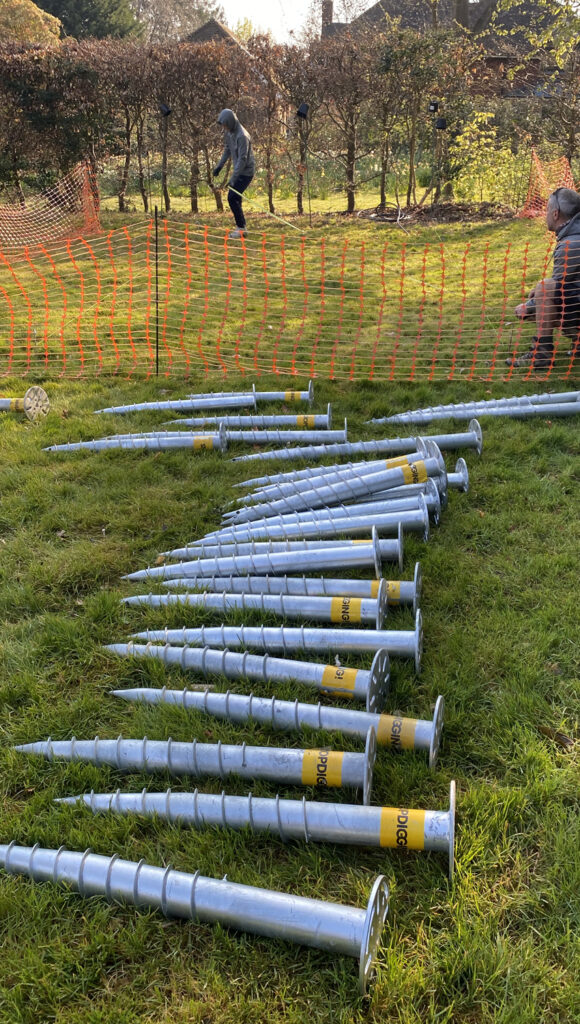
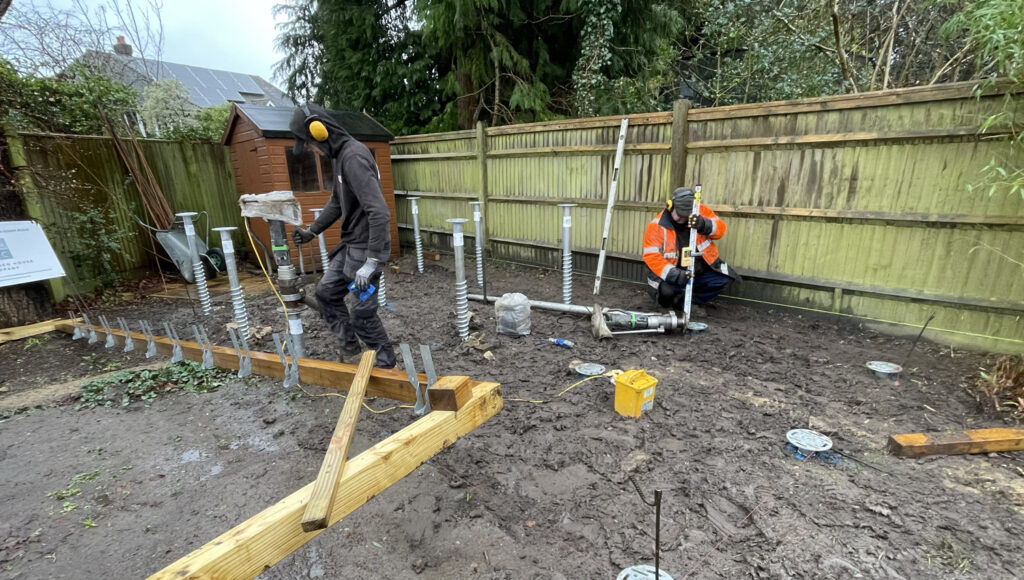
Ground screws, also known as screw piles or helical piers, are essentially large screws with a helical blade that are screwed into the ground to provide a solid foundation for garden room structures. They are made of high-quality steel and are designed to resist compression, tension, and lateral forces.
One of the main advantages of using ground screws for your garden room is that they can be installed quickly and easily without the need for heavy machinery or concrete. They can also be easily removed and reused if needed, making them a sustainable and eco-friendly option.
However, it’s important to note that ground screws may not be suitable for all types of soil conditions or for structures that require a deep foundation. The soil should be tested to ensure that it can support the load of the structure being built and that the ground screws can be properly anchored.
It’s also essential to work with a reputable and experienced contractor who can provide guidance on whether ground screws are the best foundation option for your specific project and ensure that they are installed correctly.
At the Garden House Company, ground screws are our preferred choice as they’re less mess, less cost, and provide durable bases for our garden rooms.
Concrete slab
This is a traditional and reliable choice of garden room foundation which has been used for many years. It involves excavating the ground where the build will be, setting out a timber frame, and filling the hole with a compacted concrete, brick, or stone base.
The benefits of this method are that it’s reliable, doesn’t allow moisture into the room, and is long-lasting. See how The Garden House Company installed this foundation in Sarah’s home garden gym.
That being said, it can be more expensive and take more time due to the labour involved and the time needed for the concrete to set. Additionally, it can be damaging to the environment without the proper planning and consideration.
Pro tip: do not use a concrete slab if your garden room is next to overhanging trees, as the concrete can seep into the roots and kill them!
Concrete piers and piles
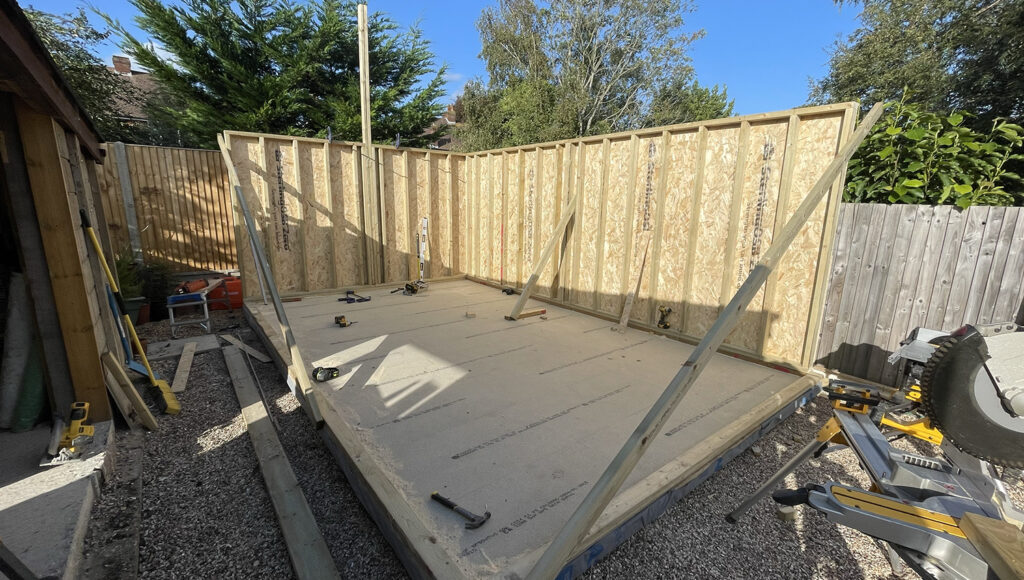
Concrete piers are similar to concrete slabs but instead of pouring out a large base, you place concrete pillars at strategic points to support the weight of your garden room. This method uses less materials and is well-suited for uneven ground or soil. It’s also faster than a concrete slab.
Concrete piles involve filling a steel structure with concrete and driving it deep below the ground – this may be pre-cast, which means the concrete is set before it goes into the ground, or it may be cast-in-place, which means the concrete piles are poured on-site.
Again, concrete piles are very effective at distributing weight evenly and are highly water and chemical resistant. On the other hand, they’re very heavy and require a lot of machinery and transportation to move them to the site, all of which can add up the cost.
Plinth
Plinth foundations are typically made from reinforced concrete which also help distribute the weight of your garden room across a large surface. One of the key benefits is that they’re pretty easy to install and don’t require any setting time for the concrete.
Additionally, they can be removed from the ground without affecting anything, making them a more eco-friendly foundation option.
This type of foundation is more suitable for smaller garden room projects.
Wooden frame base
Sometimes known as a timber substructure, a wooden frame base involves raising your garden room off the ground with pretreated timber, preventing contact with moisture. This method is suitable for level ground and can be a cost-effective solution.
Other benefit are that it’s more of a sustainable, eco-friendly option and is generally easier and faster to install than concrete foundations. However, you’ll need to keep an eye on it more as it’s not as heavy-duty and durable as concrete or metal.
What is the best garden room foundation?
The best garden room foundation will depend on the size of your build, what it’s being used for, your budget, and the ground conditions. If durability is your main concern, then a traditional concrete solution may be best, whereas if you’re more environmentally-minded, you may want to consider ground screws or wooden frame bases.
With all of that said, you may also be under certain obligations based on local council regulations so it’s also important to understand planning permissions. Learn more about garden rooms and UK planning permission.
At The Garden House Company, we weigh up all of these factors and advise you on what the best foundation will be for your specific garden room.
What is the most cost-effective garden room foundation?
The cost of a garden room foundation varies depending on the option you choose, however, generally speaking ground screws are the most cost-effective option.
A poured concrete slab can range anywhere from £2,000 to £4,000 whilst ground screws can cost between £1,500 to £3,000.
It’s also worth noting that the durability of your foundation will impact the value of your garden room if and when it comes time to sell your home. Read our other blog post about how investing in a garden room can add value to your home.
Need further advice on garden room foundations?
The Garden House Company provides a design and planning service to help you decide which foundation will be best. We’re also happy to chat about any of your concerns!